Mask Network to Steward the Next Chapter of Lens
Mask Network becomes the new steward of Lens, bringing consumer-grade SocialFi applications to the leading decentralized social platform.
 byLens Labson
Today, we're proud to share that Mask Network will steward the next chapter for Lens, bringing the strongest onchain SocialFi foundation to life through intuitive, consumer-ready applications.
Mask Network is the right new steward of Lens because they share the vision of user-owned social and critically, have the product expertise to take it from infrastructure to everyday use. What the ecosystem needs now is not more protocols, but great consumer experiences.
Lens: The Leading Decentralized Social Platform
Since its launch, Lens has grown into the leading decentralized social platform, proving that open, user-owned social networks can operate at real-world scale and deliver the kind of user experience people expect. With that foundation in place, Lens is ready for its next chapter.
Following the launch of Lens Chain and V3, milestones that established Lens as foundational infrastructure for onchain social and the emerging SocialFi ecosystem, it became clear that the community was ready for something more unified: a social experience built directly on top of Lens Chain. While we deeply believe in this vision, building and operating consumer social products at scale requires dedicated focus and expertise. To take on this next step, Suji Yan and the Mask are the best because of their expertise, commitment to decentralized values, and vision.
Lens Laid the Foundation

From protocol to ecosystem to its own purpose-built chain, Lens laid the foundation for a new generation of SocialFi applications.
Lens began as an idea rooted in a simple belief: that users should own their social presence online. The milestones that followed brought that belief to life.
In 2021, while continuing our work in decentralized finance, we also began exploring how the principles of open, composable protocols could transform social networks. These principles allowed anyone to build, extend, and innovate without permission, sparking a simple question: if that model works for finance, why not for social? Why not build a social graph the same way Ethereum builders create DeFi, openly, permissionlessly, for everyone?
That question became the seed of Lens: a social network where users are not the product, but the owners of their data, built as open infrastructure for permissionless experimentation. For the first time, social activity itself could become a programmable economic primitive. Profiles, follows, content, and communities could now be monetized natively, without relying on centralized platforms to intermediate value. This laid the foundation for SocialFi, where creativity, attention, reputation, and relationships participate directly in open, onchain markets.
Early Web2 platforms promised openness, but over time APIs were closed, access was restricted, and user data was locked away. Lens was built to offer a different model, where developers can build without gatekeepers.
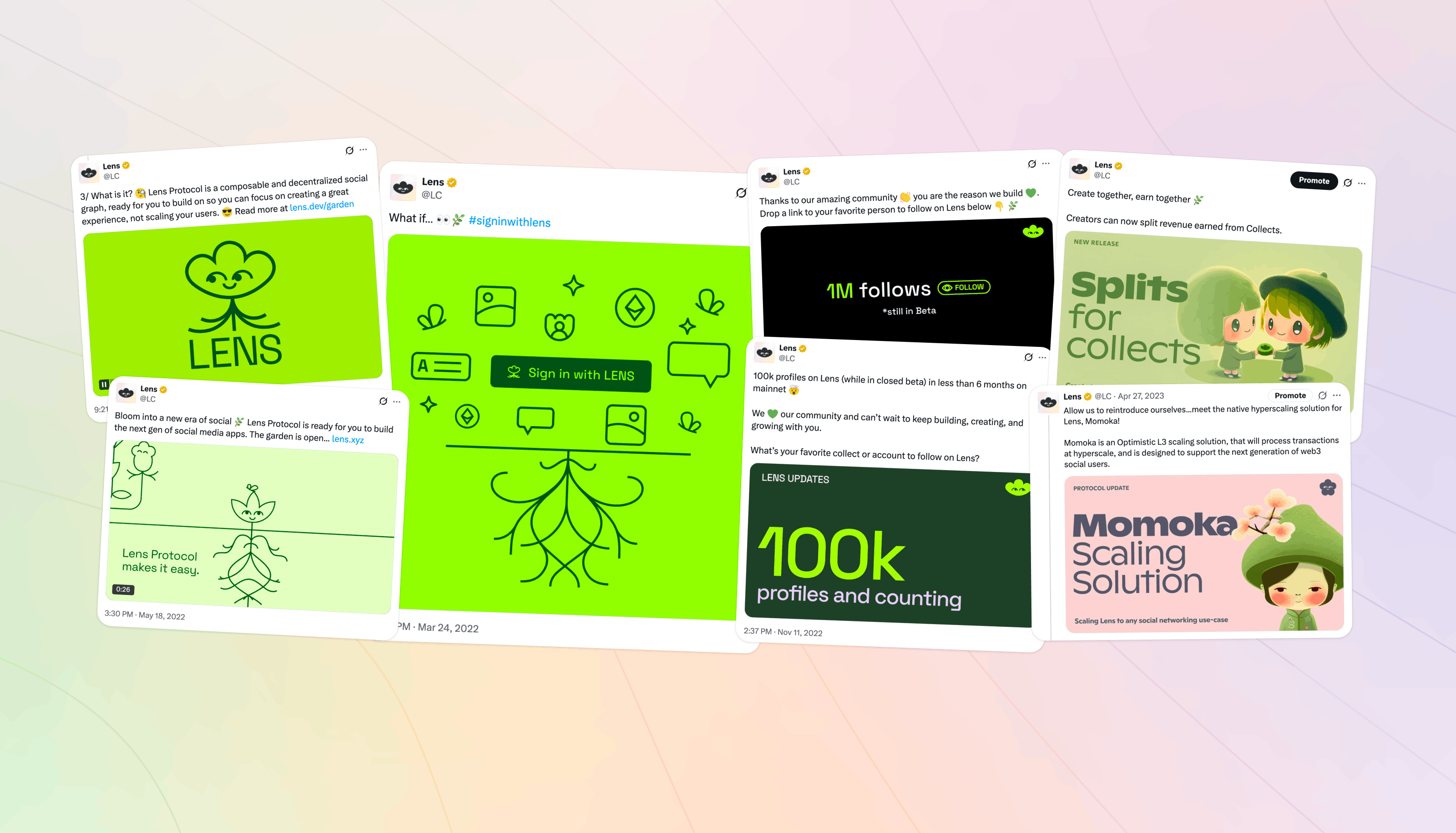
From the start, we knew no social network could grow without engaged users. On February 7, 2022, we announced our intentions to the community and invited them to sign an onchain Open Letter. In March, continuing to build in public, Lens' API launched in beta. The LFGrow hackathon opened the protocol to early builders.
Lens V1 launched May 2022 on the Polygon Mumbai testnet. Signatories of the Open Letter could mint their profiles and follow each other. The initial version included a set of open, modular primitives that shaped Lens through V3. Every profile was an NFT. Every relationship was portable. Every app tapped into the same shared social graph.
At launch, more than 50 projects had been built on Lens. Social was finally composable. This early wave of builder adoption validated the core thesis: open social infrastructure could attract developers at unprecedented speed.
Very quickly, Lens apps began to consolidate: Orb, Hey (then Lenster), Focalize, Soclly, Phaver, and Iris, to name a few. By January 2023, Lens exceeded 100,000 minted profiles and counted 127 projects on the protocol. In April, Lens went live on Polygon mainnet. This marked one of the first times a decentralized social network demonstrated sustained, organic adoption at meaningful scale.
In November 2023 at Devconnect Istanbul, Lens V2 launched, introducing greater composability and upgrades that let teams build social experiences and monetization faster. It brought the first large-scale protocol migration across apps, profiles, connections, and interactions, as well as a set of standalone primitives that developers could use and integrate into their app or website. V2 marked the moment Lens transitioned from experimental infrastructure into production-grade social rails, capable of supporting real consumer applications with complex monetization and identity requirements.
After V2, more work remained. UX, scalability, and speed required improvements to give the ecosystem a real shot at mainstream adoption.
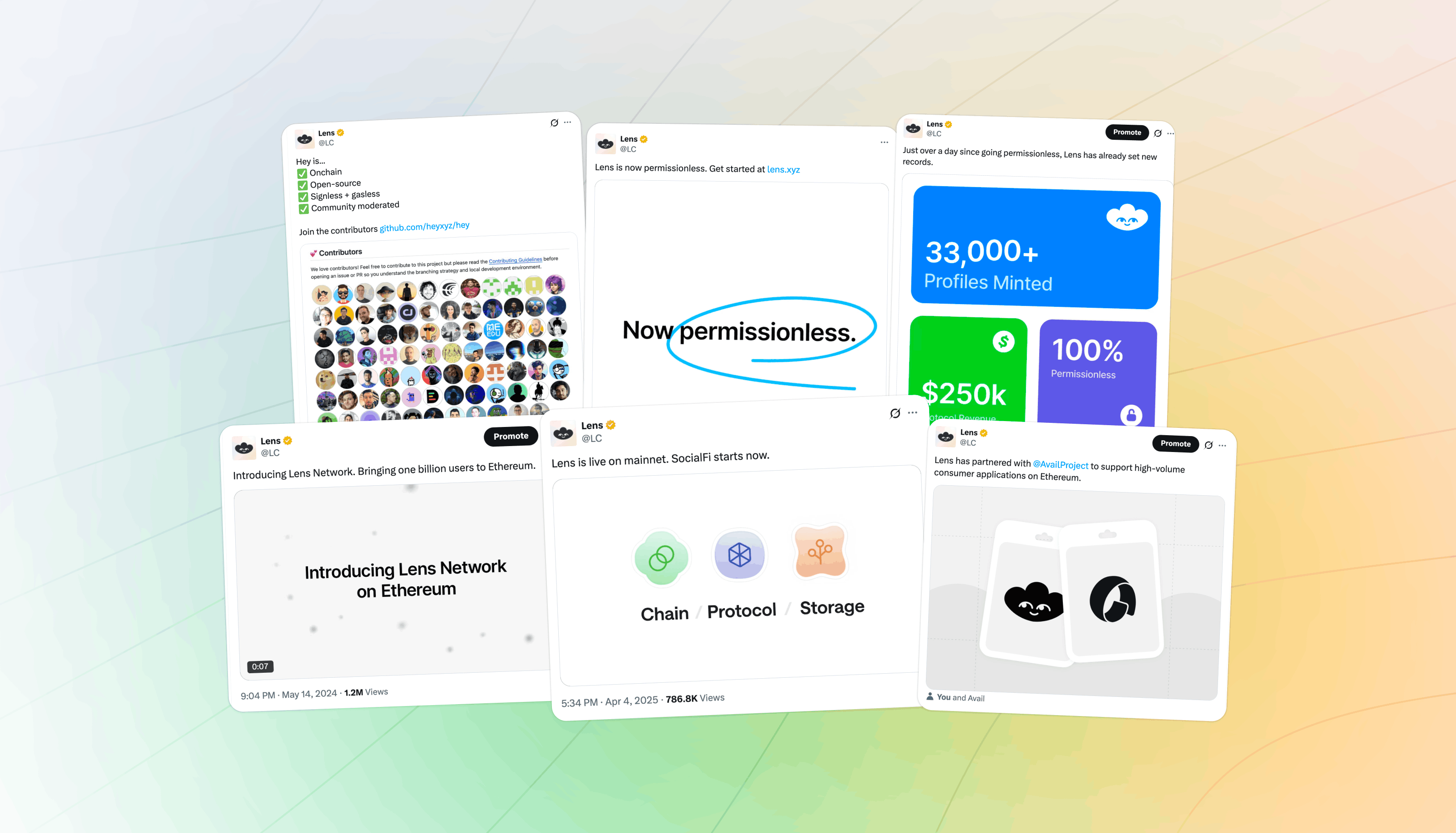
In February 2024, after a community vote through Lens Improvement Proposals (LIPs), Lens entered its permissionless phase and came out of beta, allowing anyone to mint a profile.
Focus on Mass Adoption
Despite this progress, the remaining challenge was clear: we needed to build a network capable of supporting scale, monetization, and consumer-grade user experience. That required building a purpose-built network for scale, monetization, and consumer-grade user experience.
Lens Chain, powered by ZKsync and Avail, was announced in May and launched on testnet in November 2024. On April 4, 2025, Lens went live with all user data and connections in place, in the largest migration to date. With that foundation in place, social interaction itself became economically programmable.
Alongside Lens Chain, we released Lens V3, Grove, a free decentralized data storage solution, and Family Accounts. Lens uses GHO as gas, making transactions almost instant and nearly gas-free. This was a major shift for Web3 social.
For the first time, decentralized social could scale to hundreds of millions, and eventually billions, of users on open infrastructure.
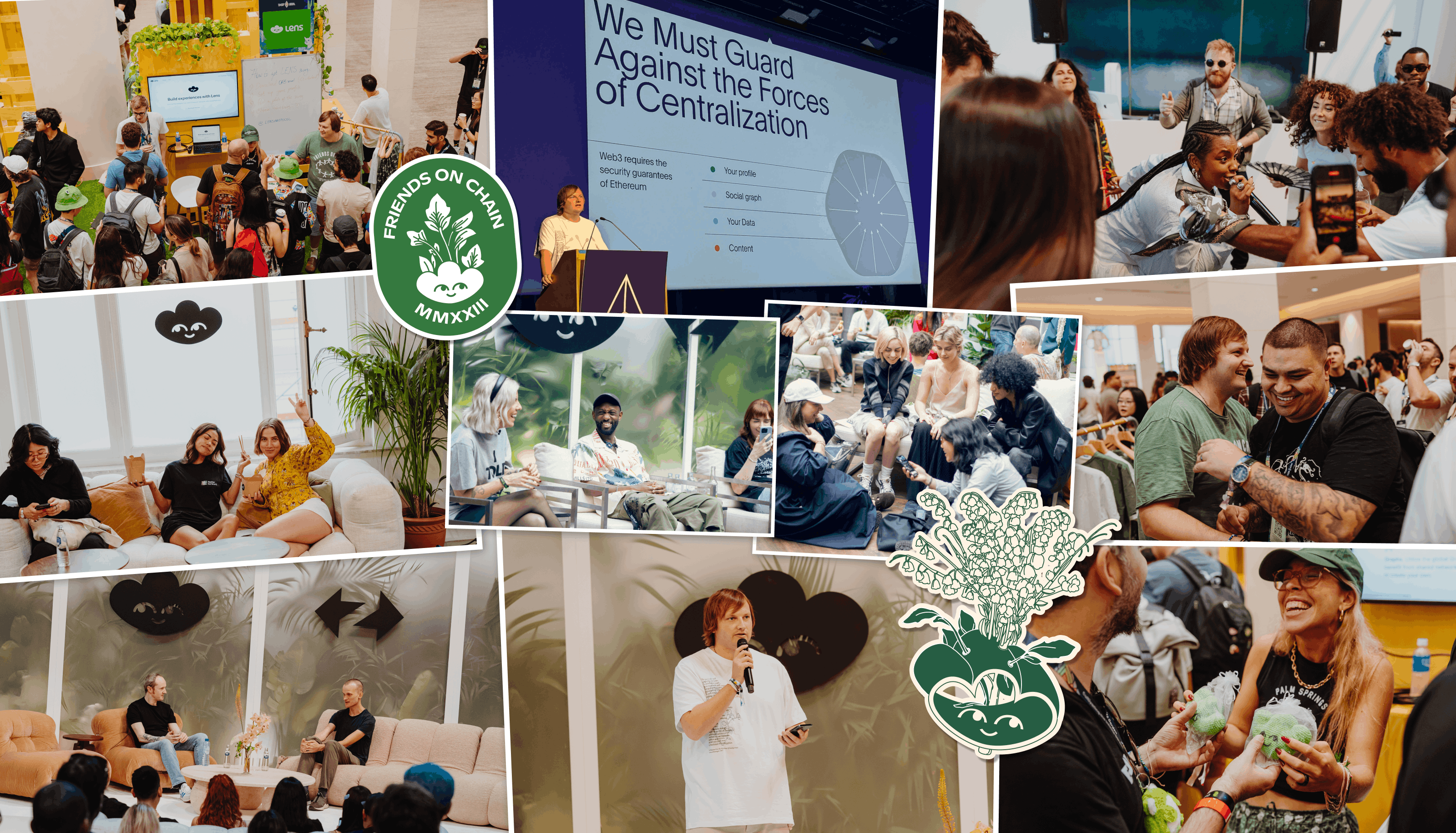
After this milestone, the next phase required a unified social experience built directly on the network. The next chapter of Lens is no longer about protocol experimentation. It's about consumer-grade execution, product design, and global distribution.
With Mask now stewarding this next important phase, our role shifts from day-to-day product development to advisory. In that role, we remain fully aligned with the mission to make open, scalable, user-owned social networks a core pillar of the future internet. We are committed to the long-term success of Lens, its builders, its community, and to Suji and the Mask team.
Lens established the groundwork for the next generation internet, where social converges with economic life and DeFi becomes the financial rails of the internet.